
Indonesia

bilaterals.org | 19-Mar-2026
L’accord Canada-Indonésie est une récupération sophistiquée du langage féministe pour servir des intérêts économiques néolibéraux, plutôt qu’un véritable programme de justice économique en faveur des femmes.
keywords:
actions | resistance ,
Canada ,
corporate interests ,
from the movements ,
Indonesia ,
investor-state disputes | ISDS ,
women
bilaterals.org | 13-Mar-2026
The Canada-Indonesia trade deal’s “women-inclusive” label masks a neoliberal agenda that benefits Canadian corporations more than Indonesian women. It exploits feminist language to legitimize market expansion, while reinforcing structural inequalities—especially the burden of unpaid care work on women—and enabling corporate power through costly investor rights (ISDS). True gender justice requires systemic change, not just market inclusion.
keywords:
actions | resistance ,
Canada ,
corporate interests ,
from the movements ,
Indonesia ,
investor-state disputes | ISDS ,
women
RRI | 4-Feb-2026
Indonesia’s membership opens new opportunities to access international dispute resolution mechanisms, strengthen its role in shaping international law, and nominate Indonesian legal experts as arbitrators within the PCA.
keywords:
Indonesia ,
investor-state disputes | ISDS

CCPA | 2-Oct-2025
Free trade deal is a gift to mining and fossil fuel companies but sidelines human rights and industrial development.
Lexology | 15-Oct-2024
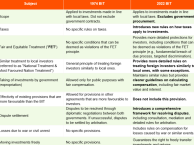
The 2022 BIT offers several important advances compared to the 1974 BIT, providing greater certainty and protection for investors.
E3G | 31-Jul-2024
TNI | 22-Jun-2023
In the era of the energy transition, questions of state control and power are back on the agenda in a big way.
Global Arbitration News | 2-Jun-2021
The BIT serves as a prime modern example of investment treaties which seek to rebalance the distribution of rights between host States and investors.
The Online Citizen | 12-Mar-2021
Besides protection and dispute settlement, the BIT also includes several key changes in terms of application and restriction.

Indonesia for Global Justice | 11-Sep-2020
Indonesian CSOs assesses the national economic recovery strategy by strengthening policies economic liberalization focusing only on investment and exports will only be increasingly open space for corporate monopoly on economic resources.